Are you an open book?
Are you an over-sharer?
Do you reveal too much of yourself too soon?
In other words, are you an open book?

I met a man this morning that I’ve been wanting to talk to about a place I want to visit and within five minutes, he told me his daughter (the young woman I got his information from) was adopted.
“I was married to her mother. Adopted her when she was young…but not as young as her sister.”
Wow.
Ok.
But all I wanted to know was should I drive or take the train?
The revelation about his daughter made no difference to me whatsoever.
It wasn’t relevant.
Another example: Sometimes, my little dog doesn’t feel like taking her afternoon walk.

So, I might play a game with her where I toss a tiny piece of cookie on the ground ahead of her and she gets excited and walks a bit further.
Then after a few steps, she’ll stop in the road again.
But I can’t keep throwing her cookies.
I want something good left for the rest of the walk.
It’s the same with writing a story.
You can’t toss out all your cookies at the front end, or you won’t have anything exciting left for the rest of your book.
The reader, like my dog, needs to understand that there are more cookies if they follow along.

If you’re a writer, it’s important to learn how much information to hand out and when.
Too much information too soon doesn’t give your reader anything to look forward to.
Of course, they may not know they’ve been given too much information yet.
But when stakes don’t get raised, when the situation doesn’t advance, the reader’s going to get bored.
And a bored reader is—well, no longer your reader.
In early drafts, it’s tempting to explain — backstory, motives, secrets, the whole emotional suitcase.
We want readers to understand.
We want them oriented.
So, we lay it all out.
But story thrives on restraint.
We want readers on the very edge of their seat.
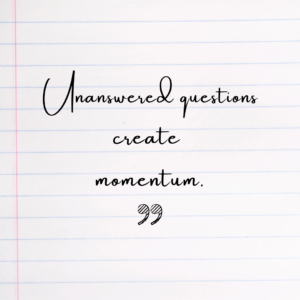
Withholding (strategically, not confusingly) creates momentum and unanswered questions keep your reader turning pages.
Fiction isn’t about hiding information.
It’s about releasing it at the exact moment it hurts—or heals—the most.
So how do we writers know when to toss new information to the reader?
Ask: Does anything change, if the reader learns this now? If the answer is no, then it’s likely too early.
You can also ask: If I give the reader this information now, will I be left with any cookies for the end of the book?
And of course, you can also ask: Does this information raise the stakes?
Does it complicate a choice the character has already made?
Allow your reader to sit in not-knowing for a while—not in confusion but in wonder.

No TMI.
Try to tease the secret a little longer—in conversation, as well as in fiction.
Have a great week,
~ Gail
Onward!
Before you go, don’t forget to sign up for my mailing list, below